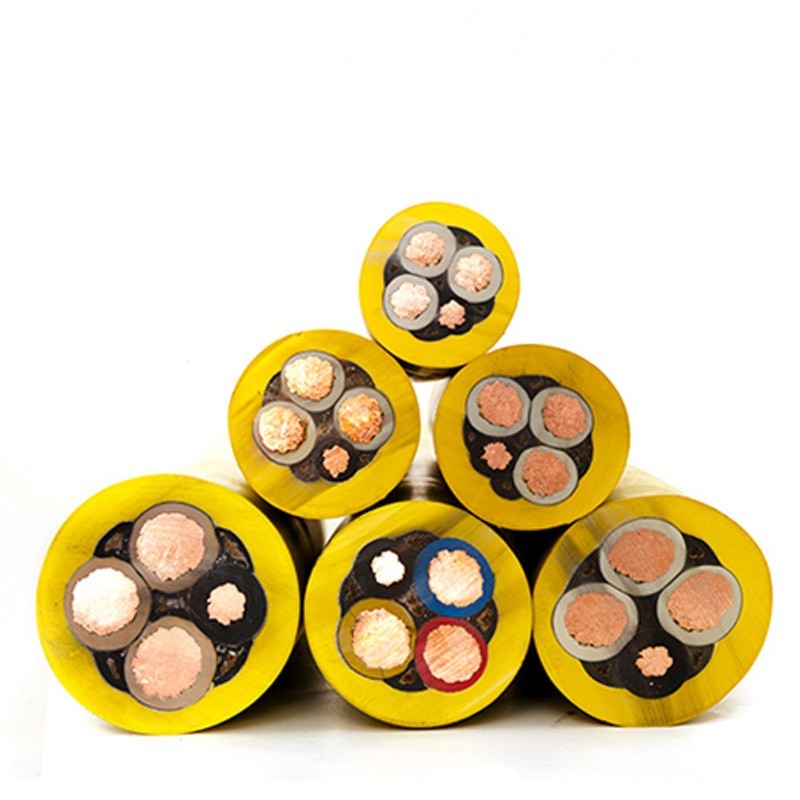
Deep in underground coal mines, shearers operate day and night like "steel giants," undertaking the core task of coal mining. The key to supporting the continuous operation of these "giants" is the shearer cable, hailed as the "lifeline" for power transmission underground. It not only provides stable power support for shearers but also maintains stable performance in extremely harsh environments such as dragging, extrusion, abrasion, oil contamination, and humidity. Its quality and reliability are directly related to the safety, efficiency, and continuity of coal mining.
As a core category of mining cables, shearer cables are essentially different from ordinary industrial cables. The underground coal mine environment features narrow spaces and complex working conditions; shearers need to move frequently during operation, with the cables being repeatedly dragged and bent accordingly. Meanwhile, there are multiple risks underground, such as coal block impact, mine car rolling, engine oil corrosion, and gas accumulation. These require shearer cables to have exceptional flexibility, wear resistance, mechanical damage resistance, as well as special properties like flame retardancy and antistatic. Based on different underground needs, shearer cables have formed multiple sub-categories, among which power cables and shielded cables are the most representative.
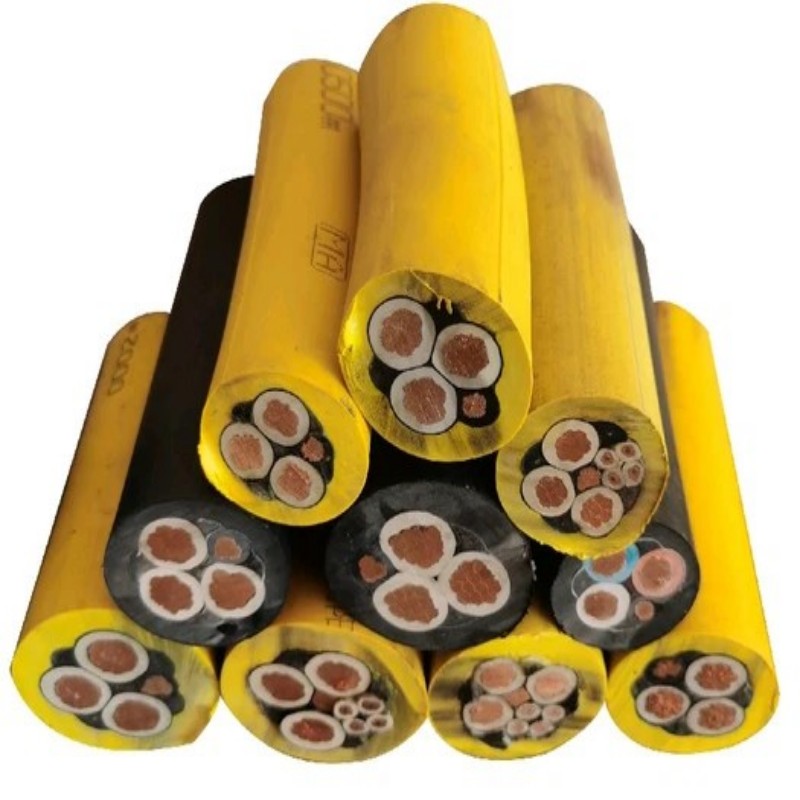
Shearer power cables are the core carrier for underground power transmission, with mainstream models including MCP, MCPT, MCPTJ, etc. Their core function is to transmit three-phase alternating current to shearers, ensuring the normal operation of equipment. To adapt to the needs of mobile laying underground, their conductors are made of stranded oxygen-free copper wires. This structure not only has excellent electrical conductivity but also extremely high flexibility, which can meet the requirement that the cable can be bent frequently without conductor breakage. The insulation layer is made of oil-resistant and flame-retardant cross-linked polyethylene (XLPE) or neoprene, which can effectively insulate current and resist corrosion from engine oil and hydraulic oil underground. The sheath layer is made of high-strength wear-resistant chlorosulfonated polyethylene (CSM) or polyurethane (PU) materials, greatly improving the cable's resistance to wear and extrusion. It is worth noting that upgraded models such as MCPT and MCPTJ also integrate control wire cores, which can realize signal interaction between the shearer and the control system while transmitting power, simplifying the layout of underground cable laying.
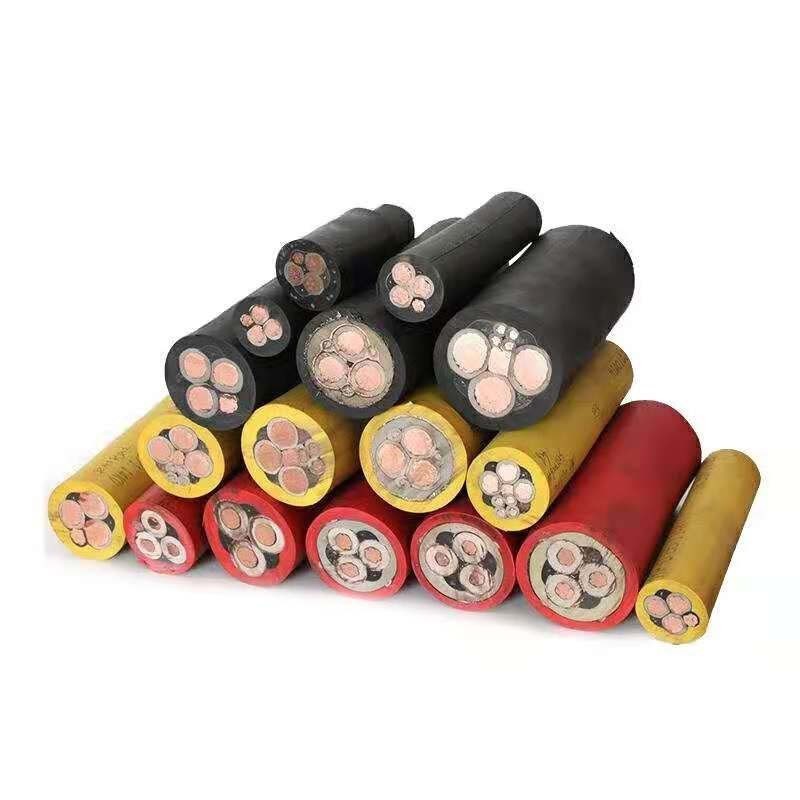
In underground environments with strong electromagnetic interference, shearer shielded cables play an irreplaceable role, with core models being MCPB and MCPTB. Various electrical equipment underground generates electromagnetic signals during operation; if ordinary power cables are used directly, it may cause interference to the shearer's control signals, leading to equipment misoperation. Shielded cables, however, add a braided copper wire shield outside the insulation layer. When the shield is grounded, it forms an effective electromagnetic shielding barrier, which can not only block the interference of external electromagnetic signals on the internal signals of the cable but also prevent the radiation of power signals transmitted by the cable itself, ensuring the stable operation of the shearer's control system.
The harsh underground environment places extremely high requirements on the technical parameters of shearer cables. Taking the commonly used MCP-0.66/1.14kV cable underground as an example, its rated voltage must meet the low-voltage level requirement of 0.66/1.14kV to adapt to the underground power supply system; the insulation resistance at 20℃ is not less than 100MΩ·km to ensure reliable insulation performance; the long-term operating temperature does not exceed 90℃, and the maximum temperature during short circuit does not exceed 250℃, which can withstand temperature fluctuations under complex underground working conditions; the bending radius is not less than 6 times the outer diameter of the cable to ensure flexibility during mobile laying. More importantly, the cable must pass flame retardancy and antistatic tests, comply with the GB/T 18380 standard, with no spread of single vertical combustion, and the surface resistance of the sheath is not greater than 1×10¹²Ω, fundamentally avoiding safety accidents such as gas explosions caused by static sparks.
To ensure the quality and safety of shearer cables, strict certification standards have been formulated both domestically and internationally. In China, shearer cables must comply with the MT 818-2019 "Mining Cables" standard and obtain the Mine Product Safety Mark Certificate (i.e., "MA Mark"); cables without this mark are strictly prohibited from being used underground. For export products, it is necessary to adapt to corresponding standards according to the target market, such as the EU's EN 50306 standard for mining mobile cables and the US's UL 1581 standard. Coal-rich countries such as Australia and South Africa also require local exclusive mining safety certifications to ensure that the cables meet the safety specifications for local underground operations.
In addition to high-quality product selection, daily maintenance and management are also key to extending the service life of shearer cables and ensuring underground safety. Coal mining enterprises need to establish a sound cable inspection system, regularly check whether the cable sheath is damaged, cracked, or aged, and promptly handle problems such as loose cable joints and water ingress. During cable laying and dragging, avoid direct friction between the cable and sharp objects or metal components, and reasonably set up cable drag chains and guiding devices to reduce mechanical damage. At the same time, do a good job in cable storage management, avoiding long-term storage in humid and high-temperature environments to prevent insulation layer aging and failure.
With the continuous upgrading of coal mining technology, intelligent and large-scale shearer equipment has become increasingly popular, putting higher requirements on the performance of shearer cables. In the future, shearer cables will develop towards higher voltage resistance, lighter weight, stronger wear resistance, and intelligent monitoring. Through material innovation and structural optimization, the reliability and service life of cables will be further improved, providing a more solid power guarantee for intelligent coal mining. As the "lifeline" for power transmission in underground coal mines, the technological progress and quality improvement of shearer cables will surely inject stronger momentum into the safe, efficient, and green development of the coal industry.